
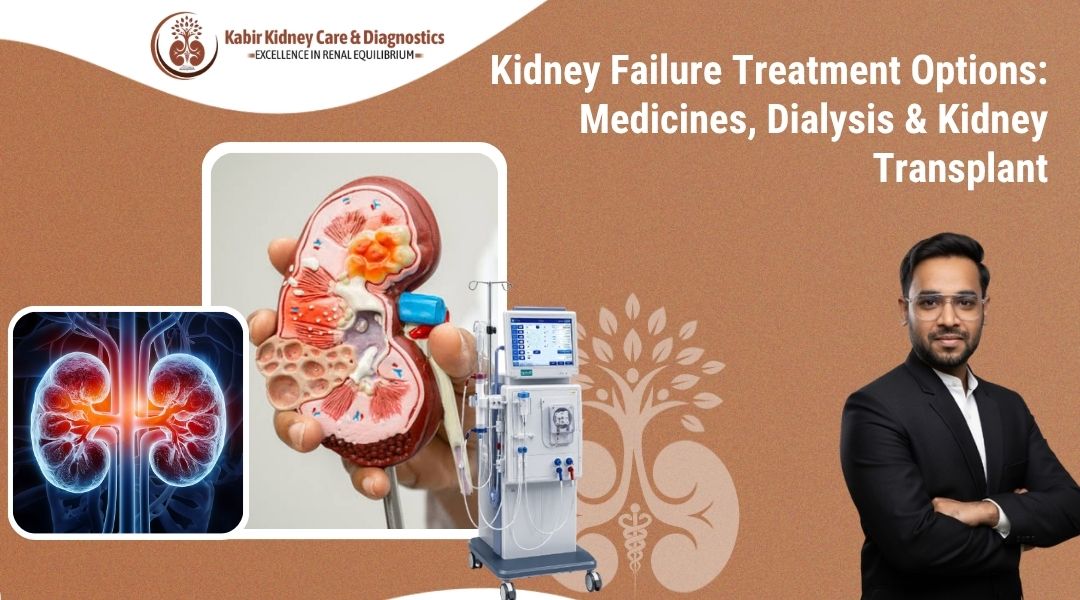
When a person is diagnosed with kidney failure, many questions come to mind:
- Will I need dialysis immediately?
- Can medicines improve my kidney function?
- Is kidney transplant possible?
- Will I be able to continue my normal life?
The answer depends on several factors, including the cause of kidney failure, the stage of kidney disease, remaining kidney function, and overall health.
Not every patient with kidney failure requires the same treatment. Some kidney problems may improve with timely medical care, while others may require long-term treatment options such as dialysis or kidney transplantation.
In this article, we will explain the different kidney failure treatment options and help you understand when medicines, dialysis, or kidney transplant may be recommended.
What Is Kidney Failure?
Kidney failure means the kidneys are no longer able to remove enough waste and excess fluid from the blood to keep the body functioning normally. It can develop suddenly due to acute kidney injury (AKI) or gradually as a result of chronic kidney disease (CKD).
The severity and cause of kidney failure determine which treatment is needed. Some cases may improve with treatment of the underlying cause, while advanced kidney failure may require dialysis or kidney transplant.
Acute Kidney Injury vs Chronic Kidney Disease
Acute Kidney Injury (AKI)
Acute Kidney Injury occurs when kidney function suddenly decreases over a short period.
Common causes include:
- Severe dehydration
- Serious infections
- Certain medications
- Low blood pressure
- Urinary blockage
Some patients with AKI may recover completely if the underlying cause is identified and treated early.
In some cases, temporary dialysis may be required until the kidneys recover.
Chronic Kidney Disease (CKD)
Chronic Kidney Disease develops slowly over months or years.
Common causes include:
- Diabetes
- High blood pressure
- Long-term kidney inflammation
- Genetic kidney disorders
When CKD reaches an advanced stage, kidney function may become permanently reduced, and patients may need dialysis or kidney transplant evaluation.
Symptoms of Kidney Failure
Symptoms may vary depending on how quickly kidney function declines.
Common warning signs include:
- Swelling in feet, or ankles
- Persistent tiredness and weakness
- Reduced appetite
- Nausea or vomiting
- Changes in urination
- Shortness of breath
- Difficulty concentrating
- High blood pressure
Some patients may have very few symptoms even with reduced kidney function, which is why regular kidney monitoring is important.
Kidney Failure Treatment Options
The most appropriate treatment depends on your kidney function, overall health, and the underlying cause of kidney failure.
1. Medicines
In the early stages of kidney disease, medicines can help slow disease progression and manage complications.
Your doctor may prescribe medicines to:
- Control blood pressure
- Manage diabetes
- Reduce swelling
- Correct anaemia
- Balance minerals and electrolytes
- Protect remaining kidney function
It is important to take medicines exactly as prescribed and attend regular follow-up appointments.
2. Dialysis
When the kidneys can no longer remove enough waste and excess fluid, dialysis may be recommended.
Dialysis performs some of the work that healthy kidneys normally do.
The two main types of dialysis are:
Hemodialysis
Blood is filtered through a dialysis machine to remove waste products and extra fluid. Most patients require treatment several times a week.
Peritoneal Dialysis
A special fluid is placed inside the abdomen to remove waste products through the lining of the abdomen. This treatment can often be performed at home under medical guidance.
Your nephrologist will recommend the most suitable dialysis option based on your condition and lifestyle.
3. Kidney Transplant
For many patients with advanced kidney failure, a kidney transplant may provide the best long-term treatment option.
A kidney transplant involves replacing the damaged kidney with a healthy kidney from a suitable donor.
Following a successful transplant, many patients experience improved quality of life and greater independence. However, regular follow-up and lifelong medicines are necessary to help protect the transplanted kidney.
Your nephrologist will evaluate whether you are a suitable candidate for kidney transplantation.
Can Kidney Failure Be Prevented?
Not all cases of kidney failure can be prevented, but early care can reduce the risk.
You can protect kidney health by:
- Managing diabetes properly
- Controlling blood pressure
- Avoiding unnecessary painkillers
- Maintaining a healthy weight
- Staying physically active
- Getting regular kidney check-ups
Early diagnosis gives patients more treatment options.
Why Choose Dr. Harsh Patel for Kidney Failure Treatment?
Dr. Harsh Patel is an experienced nephrologist providing comprehensive kidney care for patients across Gandhinagar, Ahmedabad, and Gujarat.
At Kabir Kidney Care and Diagnostics, patients receive expert evaluation and treatment for:
- Kidney failure
- Chronic Kidney Disease (CKD)
- Acute Kidney Injury (AKI)
- Dialysis management
- Diabetic kidney disease
- High blood pressure-related kidney disease
- Kidney transplant evaluation and follow-up
Dr. Harsh Patel focuses on accurate diagnosis, personalised treatment plans, and long-term kidney care to help patients make informed decisions about their health.
Frequently Asked Questions
Get Expert Guidance for Kidney Failure Treatment
Kidney failure can be a serious condition, but timely diagnosis and the right treatment approach can make a significant difference.
Whether you need medical management, dialysis support, or kidney transplant evaluation, consulting an experienced nephrologist helps you understand the best options for your health.
If you are looking for kidney failure treatment in Ahmedabad consult Dr. Harsh Patel at Kabir Kidney Care and Diagnostics for personalised treatment and long-term kidney support.
Recent posts
When a person is diagnosed with kidney failure, many questions come to mind: Will I need dialysis immediately? Can medicines improve my kidney function? [...]
When your doctor recommends dialysis, choosing the right dialysis centre becomes one of the most important decisions for your long-term kidney health. For patients [...]
Choosing the best nephrologist in Gandhinagar is one of the most important decisions if you have kidney disease, high creatinine levels, protein in the [...]
Thousands of IT professionals working in Infocity, Gandhinagar's major IT hub, spend long hours at their desks, juggle tight deadlines, and often put their [...]